Fire Abatement and Debris Cleanup at Ripplebrook Work Center, Oak Grove Work Center, and Campgrounds, Mt. Hood National Forest, OR
The Forest Service Region 6 contracted ERRG to abate, demolish, and dispose of burn debris from structures destroyed by the Riverside Wildfire that occurred in September 2020. Destroyed structures were at the Ripplebrook Work Center, Oak Grove Work Center, and Campgrounds/Day Use sites in the Mt. Hood National Forest. The project was performed in two phases. Phase 1 included performing hazardous material surveys of 40 sites impacted by the fire in accordance with Oregon Department of Environmental Quality requirements and collection of ash and debris samples for waste characterization. Phase 2 included demolition of buildings, debris removal, disposal, and confirmation sampling. Phase 2 was completed over two mobilizations due to weather. In total, cleanup was performed at 36 Forest Service-owned burned structures and two additional lots. Based on the Phase 1 results, no asbestos abatement was necessary; however, metals- and TPH- contaminated ash, soil, and debris were identified for removal.
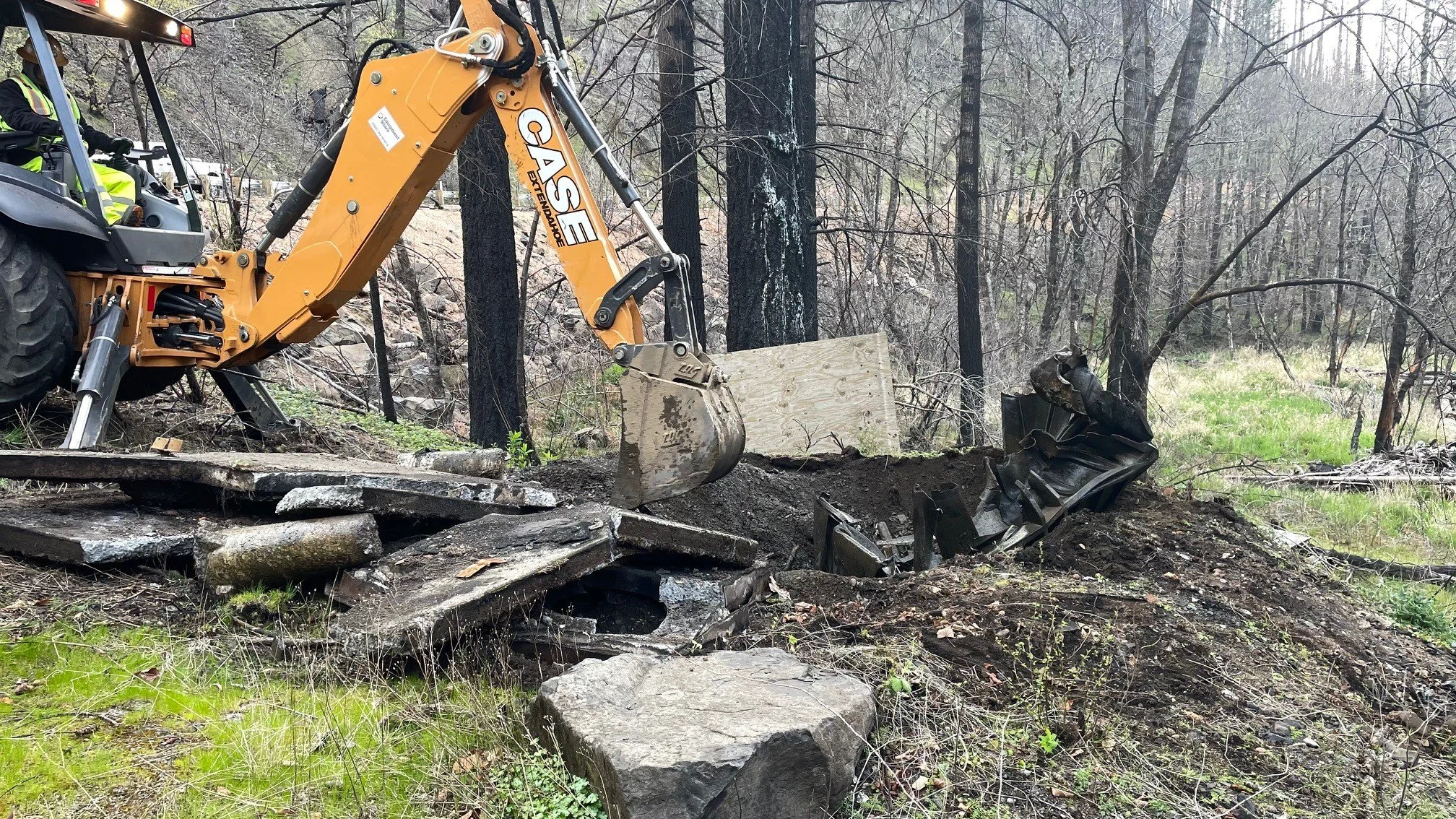
During Phase 2, ERRG demolished the remains of 36 building sites, including but not limited to chimneys, foundations, and vaults. ERRG removed all demolition debris, garbage, ash, all other materials associated with each structure, and all vehicles, travel trailers, trailers, and fuel tanks. ERRG removed debris by either mechanical or manual means and then directly loaded all wastes or stockpiled segregated by type of debris—metal, concrete, and ash/debris for subsequent loadout. Debris was cut, broken, or crushed down to a manageable size to fit into dump trucks or roll-off waste containers. Using an excavator equipped with a smooth bucket, ERRG removed ash and debris until visibly gone.
ERRG then removed concrete building footings and foundations. Concrete was segregated and loaded into trucks for off haul to a designated recycling facility. Ash and debris stockpiles were covered using 6-mil visqueen and weighted down and secured using ropes and sand or gravel bags pending off haul. ERRG protected the existing septic systems and ensured damage did not occur during demolition. ERRG also decommissioned three heating oil tanks, one aboveground storage tank, 8 underground toilet vaults, and one temporary supply well, in accordance with Oregon state regulations.
ERRG collected one 4-point soil sample from each building footprint following removal of the ash/soil and debris to confirm all contaminated material had been removed.
Following completion of removal activities at the individual sites, ERRG restored the sites to prevent erosion. Restoration included grading the disturbed areas by “back-dragging” the float-bucket of the skid steer to match the existing surrounding grade and contours with a minimum of 2% grade. Most sites did not require imported backfill material since only ash and debris were scraped from surfaces, however approximately 2,500 tons of backfill material and topsoil were imported to help establish vegetation regrowth.